
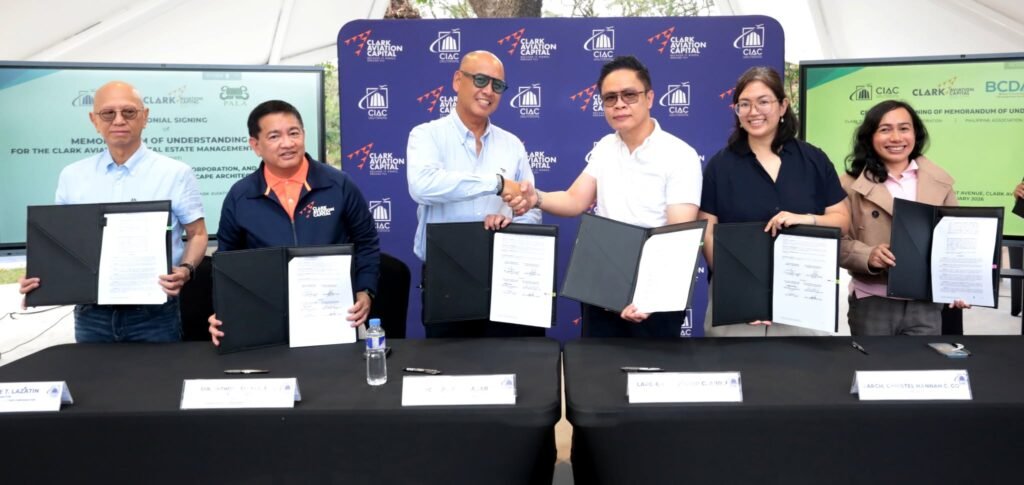
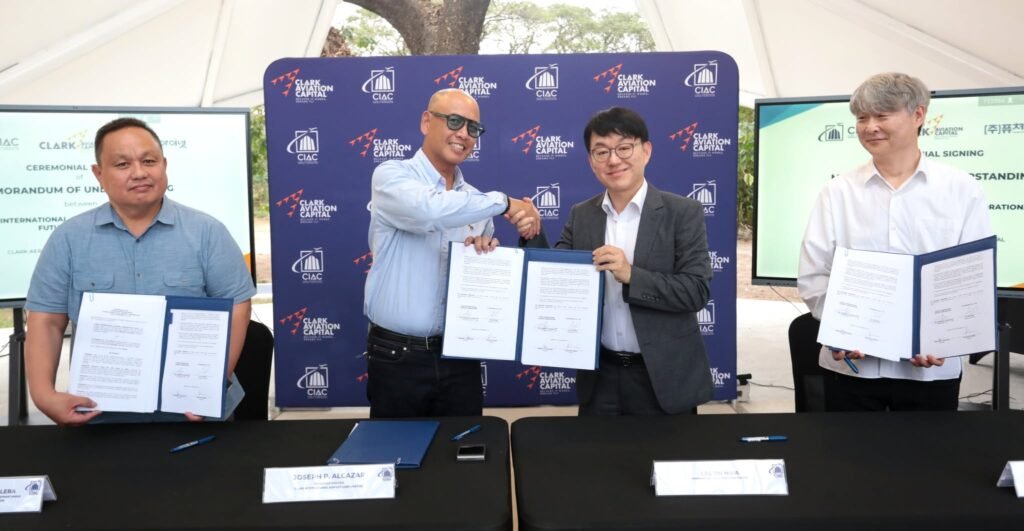
CLARK FREEPORT ZONE ⸺Beyond the ceremonial signing of two memoranda of understanding (MOUs), the latest partnerships forged by the Clark International Airport Corporation (CIAC) signal a wider transformation poised to benefit communities, businesses, and future generations.
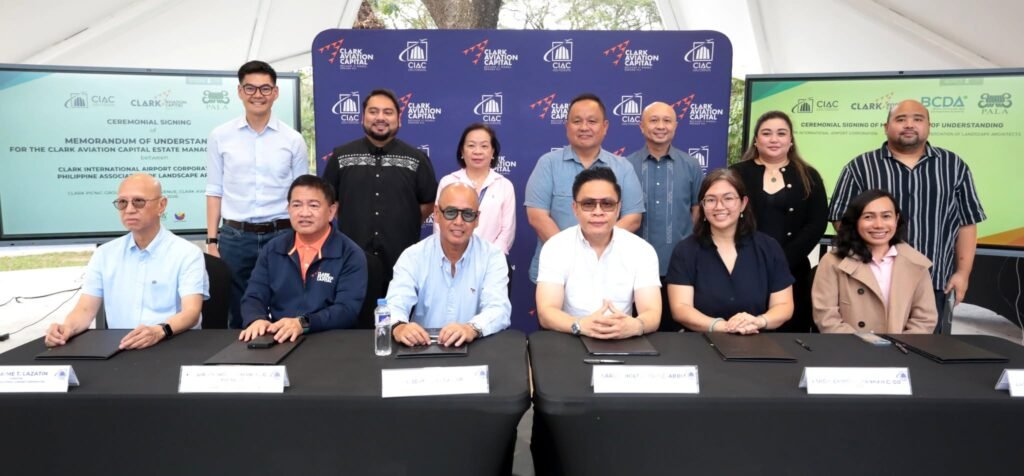
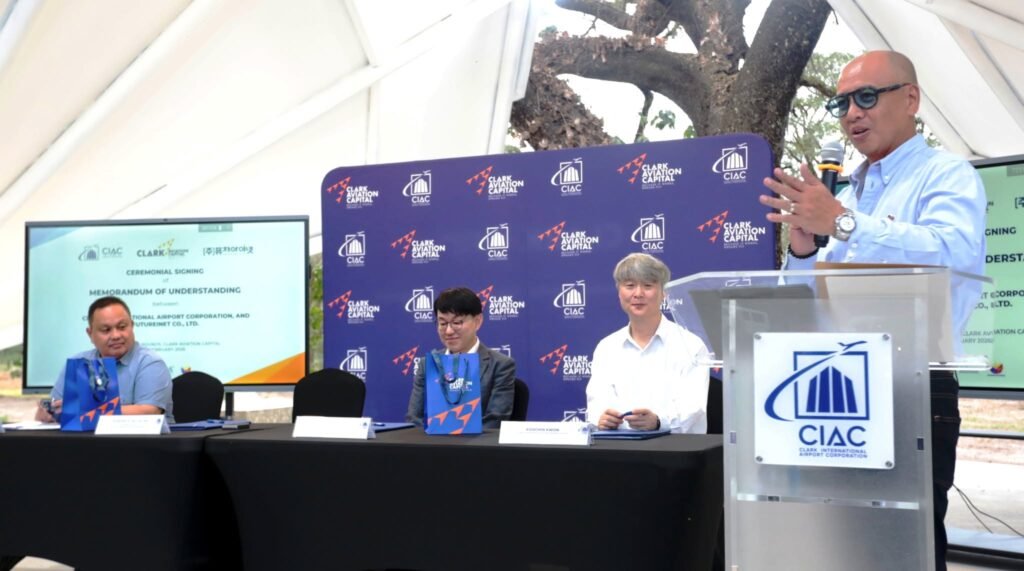
Signed on 24 February 2026 at the Clark Aviation Capital Picnic Grounds, the agreements with the Philippine Association of Landscape Architects (PALA) and South Korea-based Future iNet Co., Ltd. (FIN) are expected to reshape both the physical and economic landscape of Clark with ripple effects extending far beyond the Freeport Zone.
Through its partnership with PALA, CIAC is laying the groundwork for an urban environment that balances modernization with cultural preservation.
As Clark evolves into a global aviation and logistics hub, the Urban Renewal and Heritage Conservation Program seeks to ensure that progress does not come at the expense of identity.
A unified and sustainable landscaping and environmental framework will not only enhance public spaces but also create greener, more livable surroundings for workers, residents, and visitors.
Thoughtful landscape architecture can help mitigate urban heat, improve air quality, manage storm water, and provide accessible open spaces, all of which directly contribute to public health and community well-being.
By preserving Clark’s historical and cultural elements, the initiative also strengthens collective memory and local pride, ensuring that development remains rooted in heritage rather than erasing it.
Meanwhile, the collaboration with FIN centers on technological studies for the Cold Chain Bonded Logistics Depot system under the Clark National Food Hub, a critical infrastructure project designed to modernize the country’s food logistics network.
Efficient cold chain systems are essential to reducing food spoilage, stabilizing supply, and maintaining quality from source to market.
With improved temperature control, customs supervision systems, cost-efficiency measures, and strategic inventory management, the project aims to make food distribution more reliable and affordable.
“These partnerships are definitely huge steps in finally realizing the Urban Renewal and Heritage Conservation Program and the Clark National Food Hub Project,” Alcazar said.
For farmers, this could mean reduced post-harvest losses and better market access.
For businesses, improved logistics translates to competitiveness.
For consumers, it supports stable supply and safer food products.
Ultimately, a strengthened cold chain infrastructure contributes to national food security and economic resilience.
Together, the two MOUs reflect a broader strategy to position Clark not just as a business hub, but as a catalyst for inclusive growth.
Infrastructure that is environmentally responsible and technologically advanced can attract investments, generate employment, and stimulate allied industries, from agriculture and logistics to tourism and urban services.
As CIAC advances its flagship projects, the emphasis on sustainability, efficiency, and heritage underscores a development model that integrates economic ambition with social responsibility.
In transforming the Clark Civil Aviation Complex into the Clark Aviation Capital, CIAC’s partnerships highlight how strategic collaboration can shape a future where modernization uplifts communities, safeguards culture, and strengthens national systems that serve the public at large.
The post CIAC partnerships seen to boost heritage preservation, food security, economic growth in Clark first appeared on Pampanga News Now.